
Accessing essential technology shouldn’t be a hurdle, especially for families in need. If you’re using an Electronic Benefit Transfer (EBT) card, you might wonder how it can help you beyond purchasing groceries. Fortunately, there are ways to leverage your EBT status to secure a free laptop.
Whether for education, job searching, or staying connected, having a reliable computer can make a big difference. This guide explores how to use your “Free Laptop with EBT Card” eligibility to access valuable resources, ensuring you and your family can bridge the digital divide without straining your budget. Let’s look at the opportunities available for turning this possibility into reality.
What is EBT (Electronic Benefit Transfer)?
Electronic Benefit Transfer (EBT) is a digital system used by state governments in the U.S. to issue welfare benefits electronically. Recipients receive funds on an EBT card, which looks just like a debit card, and it can be utilized at participating retailers for authorized purchases like groceries and essential services. EBT streamlines the distribution of funds, reduces fraud, and allows quick access to benefits, supporting millions in need.
What is the Eligibility Criteria for a Free Laptop with EBT in 2024?
To qualify for a free laptop through EBT related programs, applicants generally need to meet specific criteria focused on income and program participation:
Income-Based Requirements
- Income Level: Typically, eligibility is set for households with income levels at or below 200% of the Federal Poverty Line, though this can vary by program and state.
- Proof of Income: Applicants must provide documentation such as tax returns, pay slips or it could be something related to official statements to verify income levels.
Participation in Government Assistance Programs
- Program Enrollment: Enrollment in federal or state assistance programs like the Supplemental Nutrition Assistance Program (SNAP), Medicaid, or Temporary Assistance for Needy Families (TANF) is usually required.
- Proof of Participation: Evidence such as an EBT card, benefit award letters, or official documents from assistance programs must be presented during the application process.
How to Apply for a Free Laptop with EBT?
Applying for a free laptop through programs associated with EBT requires a clear understanding of the process and the necessary documentation. Here’s how you can navigate the application steps:
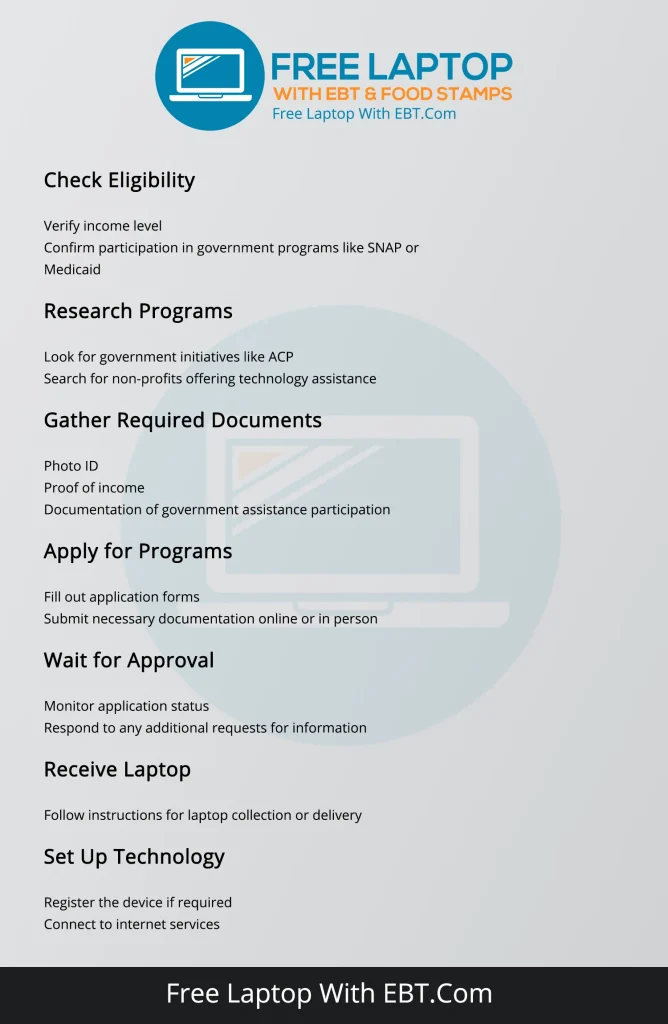
Step-by-Step Application Process
- Identify Programs: Research programs that offer free laptops to EBT recipients, such as the Affordable Connectivity Program or local non-profit initiatives.
- Check Eligibility: Confirm that you qualify based on income and program participation criteria.
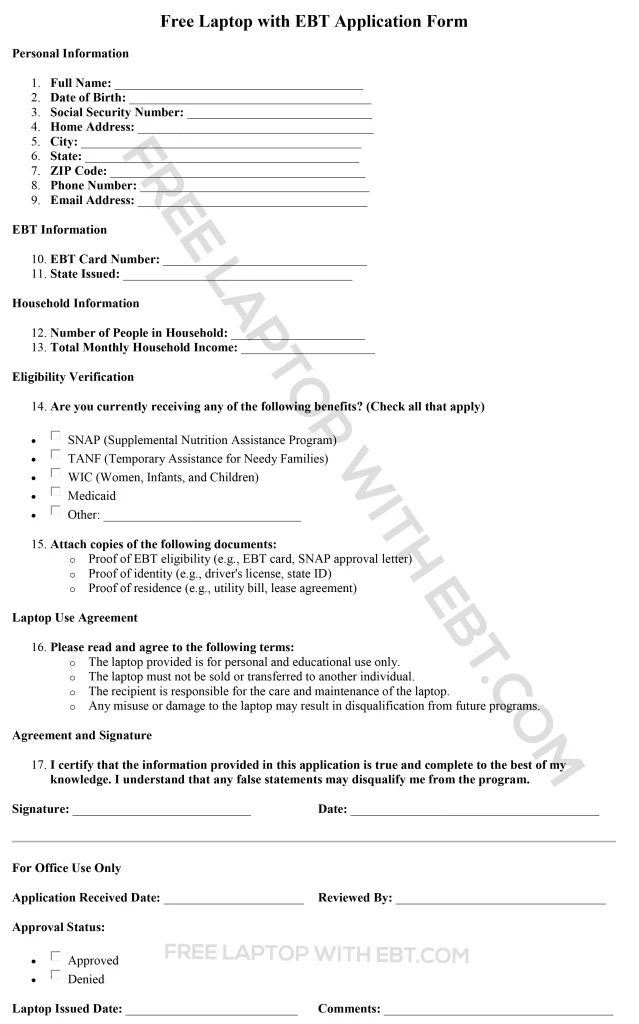
- Gather Documentation: Please prepare all required documents in advance to ensure an efficient application process.
- Complete Application Forms: Please fill out the application forms online or in person, as needed for the program.
- Submit Application: Forward your final filled application and attach the required documents. You can usually do this online, by mail, or through participating organizations.
- Wait for Approval: After you submit, now sit back and wait as, they might give an final check to your submitted application.
- Receive Confirmation: In case you get an approval, you will get an update about how you can claim your free or discounted PC or a laptop.
Necessary Documentation for Application
- Photo ID: You’ll need valid government-issued ID, such as a driver’s license or passport.
- Proof of Income: You can use an employer statements, pay slips or a copy of tax return.
- Proof of Program Participation: Copies of your EBT card, benefit award letters, or official documents from assistance programs.
- Additional Forms: Some programs may require additional forms or letters of recommendation.
What are the Programs Offering Free Laptops?
Different government and non-profit organizations provide programs to help low-income individuals get free or discounted laptops. Here’s an overview of some key programs:
Government Programs
Affordable Connectivity Program
This federal initiative provides a subsidy that can cover part of the cost of a laptop, tablet, or broadband service for eligible households. The program aims to make sure that people with less earning got their hands to the internet and necessary devices for work, school, and personal development.
Other Federal and State Programs
Various other federal and state programs may offer technology assistance as part of broader social service benefits. These programs often change based on funding and policy updates, so it’s crucial to check for current offerings in your state or through federal agencies.
Non-Profit Organizations
PCs for People
A non-profit organization that provides refurbished laptops to the eligible low-income families or a single person, including those enrolled in government assistance programs. They also provide low priced data to enhance digital inclusion.
EveryoneOn
Focused on bridging the digital divide, EveryoneOn collaborates with various local and national entities to provide affordable internet access, devices, and free digital literacy courses to economically disadvantaged households.
The On It Foundation
This non-profit targets families with students in grades K-12 who receive free or reduced school lunches. They offer free computers and internet access, along with technology training programs to support educational development.
Obtaining a Laptop Through EBT: What You Need to Know
When looking to obtain a laptop through EBT-related programs, it’s important to understand the types of laptops available and the limitations you might face:
Types of Laptops Available
- Refurbished Laptops: Many programs provide refurbished laptops that have been donated, repaired, and restored to good working condition. These devices are useful for everyday tasks like browsing the internet, using office software, and have access to the educational learning data.
- Entry-Level New Laptops: Some programs might offer new laptops, but these are typically entry-level models suitable for basic tasks. They are not usually equipped for high-performance tasks such as video editing or video gaming.
- Specialized Laptops: Occasionally, programs may have laptops designed for specific needs, such as models with accessibility features for users with disabilities or durable laptops for students.
Limitations and Considerations
- Availability: The availability of free laptops can be limited and often depends on the funding and donations received by the distributing organizations. There might be waitlists or specific enrollment periods.
- Eligibility Requirements: Most programs have strict eligibility requirements that may include income thresholds, participation in specific government assistance programs, or residency in certain areas.
- Technology Specifications: The laptops provided are often not the latest models and might come with limited specifications. This can affect the usability of certain applications or the ability to run newer software.
- Warranty and Support: Support and warranty coverage for these laptops can vary. While some may come with a limited warranty or offer support through the program, others might not, leaving recipients to manage repairs or technical issues on their own.
Troubleshooting Common Issues
When navigating the process of obtaining a free laptop through EBT-related programs, you might encounter a few hurdles. Here’s how to address them effectively:
What to Do If Your Application Is Denied
- Review the Denial Letter: Make sure to read the denial letter carefully to understand why your application was rejected. This will help you figure out what to do next.
- Check for Errors: Verify if there were any errors in your application or if additional documentation is required. Sometimes, simple mistakes can lead to application denial.
- Contact the Program: Reach out to the program’s customer service or support center. Ask for clarification on the denial and inquire about the possibility of reapplying or submitting additional information that could address their concerns.
- Explore Alternative Programs: If your application cannot be reconsidered, look for other programs that offer free or discounted laptops. Different programs may have varying eligibility criteria that might be a better fit for your situation.
- Consider Appeal Processes: Some programs might offer an appeal process. Find out if this is an option and follow the necessary steps to initiate an appeal, presenting new or overlooked information that supports your eligibility.
How to Handle Technical Problems with Your Laptop
- Consult the User Manual: Begin by checking the user manual for troubleshooting tips that are specific to your laptop model. This can often help fix common issues such as internet problems or software errors.
- Contact Support: If the issue persists, use the contact information provided by the program from which you received the laptop. Many organizations provide technical support for devices they distribute.
- Seek Local Repair Services: For hardware issues that cannot be resolved through support channels, consider local repair services. Check if your laptop is under warranty or if the program offers a service plan before incurring any costs.
- Utilize Community Resources: Some community centers, libraries, or schools may offer technical assistance or workshops on basic computer troubleshooting and repairs.
- Online Forums and Help Groups: Look for online forums, YouTube tutorials, and help groups related to your laptop’s brand or model. Community advice can be invaluable for solving specific problems.
Real-Life Impact of Free Laptops on EBT Recipients
The provision of free laptops to EBT recipients has had transformative effects on many individuals and families. These stories highlight the profound impact that access to technology can have in improving lives and expanding opportunities.
Bridging the Educational Divide
One notable success story involves a single mother from a low-income neighborhood who received a free laptop through a local non-profit organization. With the laptop, her children were able to participate in online learning, access educational resources, and keep up with their schoolwork during remote schooling periods. This access not only helped the children maintain their academic performance but also sparked an interest in digital arts, leading to the pursuit of a specialized educational program.
Enhancing Job Opportunities
Another impactful story comes from a young man who received a laptop through a workforce development program. The laptop enabled him to complete online certifications and apply for jobs that required digital literacy. Within months, he secured a better-paying job in the tech industry, significantly improving his financial situation and career prospects.
Empowering Entrepreneurs
A woman with a passion for baking received a laptop through an EBT-related initiative. She used the laptop to start a home-based business, creating an online presence, marketing her products, and managing orders. The laptop was instrumental in expanding her customer base and managing her business efficiently, leading to a sustainable source of income.
Supporting Community Engagement
In a rural area, a group of EBT recipients received laptops and used them to form a community group focused on adult education. The laptops facilitated access to online courses and enabled members to gain new skills, from language learning to technical training. This initiative not only improved individual skill sets but also helped create a feeling of community and mutual support.
Improving Access to Healthcare Information
For a disabled veteran, receiving a free laptop meant easier access to online healthcare resources, telemedicine services, and support groups for veterans. This accessibility was crucial during a time when mobility was limited, ensuring that the veteran could manage health conditions effectively and maintain contact with healthcare providers.
Frequently Asked Questions (FAQs)
When it comes to obtaining free laptops through EBT-related programs, many individuals have common queries. Here are some common questions and their answers to help guide potential applicants.
Can I directly purchase a laptop with my EBT card?
No, EBT cards cannot be used directly to purchase laptops. They are designed for purchasing food and other approved items under government assistance programs. However, having an EBT card may qualify you for other programs that provide free or discounted laptops.
How do I find programs that offer free laptops to EBT recipients?
To find programs offering free laptops, you can start by checking with local non-profit organizations, your state’s social services agency, or national programs like the Affordable Connectivity Program (ACP). Websites and community centers often have information on such initiatives.
What are the usual criteria to qualify for receiving a free laptop?
Eligibility usually includes being a recipient of government assistance programs such as Medicaid, TANF or SNAP. Additionally, most programs require proof of income to ensure that only low-income individuals and families qualify.
What kind of laptop can I expect to receive?
The type of laptop provided can vary significantly by program. Most commonly, these are refurbished laptops that are capable of performing basic tasks such as internet browsing, using word processors, and other light applications. Some programs may offer new but basic models depending on their funding and donations.
Will I need to return the laptop at any point?
Generally, the laptops provided through these programs do not need to be returned. They are intended to be a permanent aid to help recipients improve their educational and employment opportunities. You also need to make sure the specific terms of the program from which you receive the laptop.
Is there a maximum number of laptops that a household can receive?
Most programs limit assistance to one laptop per household to ensure that as many eligible families as possible can benefit. This can vary, so it’s essential to review the specific program’s guidelines.
What to do in case my laptop stops working?
If the laptop you received through a program stops working, check if there was any warranty or support offered at the time of receipt. Some programs provide technical support or have arrangements for repairs. If no support is available, local repair shops or community programs might offer affordable solutions.
Can I upgrade the laptop I received?
While upgrading is possible, it depends on the specific laptop model and its capabilities. Keep in mind that opening and modifying the hardware can void any warranty that the laptop might have.
Conclusion
EBT recipients have access to several programs that offer free or discounted laptops, aimed at reducing the digital divide. These programs are so important to improve access to education, employment opportunities, and essential online services. If you’re an EBT cardholder, take advantage of these opportunities to secure a laptop, which can be a vital tool for personal and professional growth. Explore available programs, meet the eligibility criteria, and apply to start benefiting from these valuable resources.